The Cart That Fills Itself: How Freight Minimums Shape Clinical Inventory

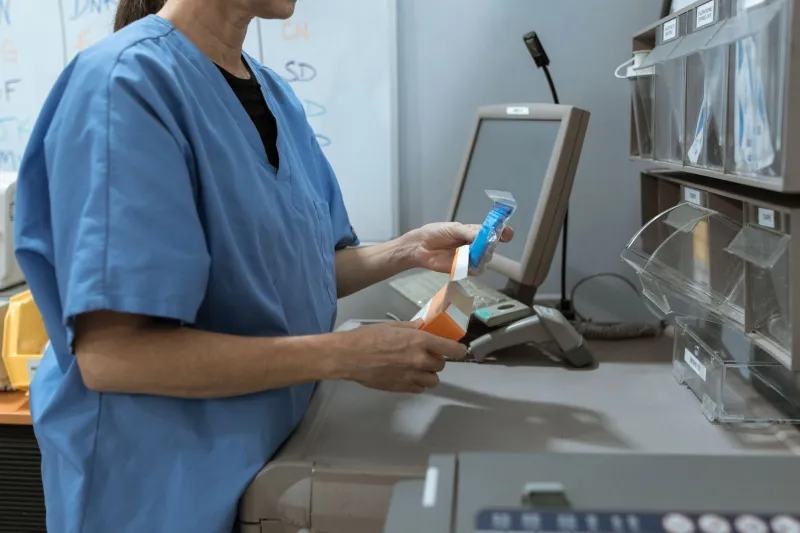
Photo: U.S. Army 7MSC by Sgt. 1st Class Joy Dulen, Public domain, via Wikimedia Commons
Free freight has a pleasing shape on an invoice: a zero where a charge could be. But in clinical supply purchasing, that zero is rarely the end of the transaction. Distributor minimum-order thresholds, often set between $250 and $750 for small-parcel delivery, convert a shipping decision into an inventory decision. The clinic that adds a few boxes to reach the threshold is not simply avoiding a freight charge. It is accepting a larger order, a longer dwell time on the shelf, and a different pattern of cash leaving the practice.
That trade deserves more scrutiny in 2026. Ambulatory practices, surgery centers, and community health centers are managing tighter product budgets, more frequent backorder notices, and greater scrutiny of storage space. A freight minimum that made sense for a large hospital warehouse can be a poor fit for a clinic with two supply closets and a narrow margin. The question is not whether free freight is attractive. It is whether the inventory required to earn it is the inventory the clinic would have chosen on clinical grounds alone.
A shipping rule that sets inventory policy
A minimum-order threshold is a pricing signal. It tells the buyer that the distributor would rather handle one larger shipment than several smaller ones. That preference is legitimate. Consolidated shipments reduce picking, packing, and delivery costs. The difficulty begins when the clinic treats the threshold as a target instead of a constraint.
Two behaviors emerge. The first is filler buying: adding items to the cart that were not planned, often low-velocity products that will sit. The second is batching: waiting until enough need accumulates to clear the threshold, which can push routine orders into less frequent, larger drops. Both can be rational in isolation. Together they can distort par levels and obscure the true cost of supply.
The clinical consequences are not abstract. A larger order consumes shelf space that may already be shared with patient files, cleaning supplies, or durable equipment. A slower cadence can leave a clinic short of a routine item between deliveries. And filler products can expire before they are used, turning a freight saving into a disposal cost with staff time attached.
Where the free freight goes
Inventory carrying cost is the first destination. Industry rules of thumb place annual carrying cost at 20 to 30 percent of inventory value, including space, handling, insurance, shrinkage, and the cost of capital. For temperature-sensitive or sterile goods, add climate control and expiry risk. A case of saline is not the same as a case of short-dated reagents, even if both arrive on the same truck.
Expiration is the sharp edge. A filler item that expires before use converts a freight saving into a documented loss. Working capital is quieter but real: cash spent on stock is cash unavailable for payroll, equipment service, or other clinical priorities. Storage labor is easy to overlook because it is spread across receiving, put-away, counting, and rotation. None of those costs appear on the freight line.
There is also a risk of false precision. A clinic may compare a $35 freight charge with the invoice price of the extra items and conclude that the threshold is obviously cheaper. That comparison ignores the time value of the cash and the probability that some portion of the extra inventory will never reach a patient. The freight charge is visible. The carrying cost is distributed across months and departments, which makes it easier to dismiss.
A landed-cost test for the threshold decision
Use a simple comparison. For a given order, calculate invoice cost, allocated inbound freight if the threshold is not met, incremental holding cost for the extra inventory, expected expiration or obsolescence loss, and handling labor. The lowest total is the better order, not the one with the smallest freight line.
At the SKU level, compare two cadences: the clinic clinical order quantity and the threshold order quantity. Estimate annual freight savings as the number of orders avoided multiplied by the freight charge. Estimate incremental holding cost as average extra inventory value multiplied by the annual carrying rate. Estimate expiry exposure as the value of slow-moving filler likely to expire multiplied by a realistic loss probability. If freight savings do not exceed the sum of those costs, the threshold is a false economy.
An example makes the logic concrete. Suppose a clinic orders a wound-care consumable every two weeks and pays $35 in freight because the order falls below a $500 minimum. To clear the threshold, it adds $120 of a slower-moving dressing. If that dressing turns over within the next cycle, the trade may be defensible. If it sits for eight months and half the case expires, the freight saving is consumed by holding cost and waste. The invoice will still show zero freight. The ledger will show the loss somewhere else.
Cadence should follow clinical velocity
High-velocity consumables can often support threshold orders because the extra units will be used. Low-velocity, short-dated, and high-cost items should not be used as filler. For those, paying freight is often the cheaper and safer choice. A clinic can also aggregate orders across categories, combining a planned glove order with a planned gauze order, to reach a threshold with products that already have a clinical destination.
Set reorder points by usage and lead time, not by freight calendar. Review the threshold quarterly against actual order history. A threshold that forces a low-velocity item into the cart every month is not a discount; it is an inventory mandate. The clinic should be able to explain why each line on an order exists in clinical terms, not merely in freight terms.
Questions that belong in the distributor conversation
Ask for the freight table in writing: threshold by ship-to location, charges below the threshold, split-shipment rules, and backorder treatment. Ask whether the threshold applies before or after contract pricing and whether returns from filler purchases carry restocking fees. Ask how emergency or drop-ship orders are handled. A distributor that competes on reliability should be willing to make these terms legible. Opacity is itself a cost.
The standard is the supply plan, not the zero
Free freight is not a hidden conspiracy. It is a pricing architecture, and like any architecture it shapes behavior. The clinic job is to see the shape clearly. Calculate the landed cost, protect shelf space and cash, and let clinical velocity set the order cadence. The best freight outcome is not always a zero on the shipping line. It is a supply plan that delivers the right products, in the right quantity, before the shelf becomes the problem. That is the standard PlesuraMed applies when supply chain decisions are made with confidence.