Before the First Shipment: Interrogating Your Distributor's Cold Chain
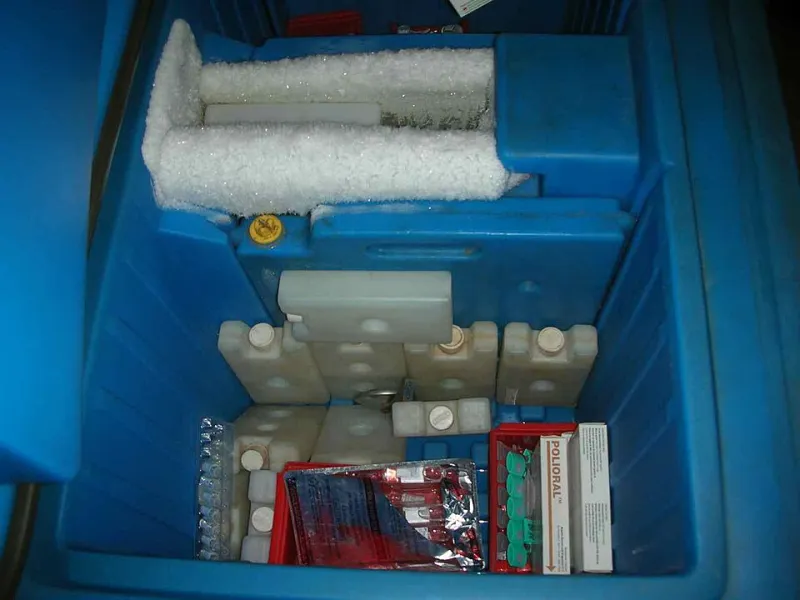
Photo: GiveWell, CC BY 3.0, via Wikimedia Commons
Temperature excursions are rarely dramatic. A vaccine shipment left on a loading dock for forty extra minutes, a data logger nobody checked, a cooler repacked with the wrong gel packs — these quiet failures can quietly compromise potency and, ultimately, patient safety. For US practices ordering temperature-sensitive pharmaceuticals, the moment to scrutinize a distributor's cold chain is before the first box ships, not after a questionable reading appears on a monitor.
Below is a practical framework for evaluating vendors, organized as a checklist you can bring directly into your next supplier conversation.
Packaging: Ask for Validation, Not Assurances
Any reputable distributor should be able to produce documentation showing that their shipping containers have been thermally validated against defined ambient conditions. When you speak with a vendor, request:
- Validation studies demonstrating performance across summer and winter profiles, ideally tested against extremes relevant to your region — a Phoenix July or a Minnesota January.
- Conditioned coolant specifications, including how long gel packs or phase-change materials are conditioned before packing.
- Defined duration claims, such as 48-, 72-, or 96-hour stability windows, and whether those claims assume someone is home to receive the package.
If a sales representative cannot produce this documentation quickly, treat it as a signal about the maturity of their logistics operation.
Monitoring: Real-Time Data Versus After-the-Fact Loggers
There is a meaningful difference between knowing a shipment failed and discovering it after a nurse draws up a dose. Ask prospective distributors:
- Do shipments include real-time temperature monitors with alerting, or only single-use PDF loggers reviewed after arrival?
- Who has access to the data, and can your practice receive alerts directly rather than relying on the distributor to self-report?
- What is the calibration cadence for reusable monitors, and are calibration certificates available?
Real-time visibility is increasingly standard among national distributors, but regional and specialty suppliers vary widely. Price the difference accordingly.
Receiving: Your Side of the Chain
Cold chain integrity does not end at your door. A distributor can run an impeccable line-haul operation and still deliver product into a practice with no receiving protocol. Before your first order, establish:
- A designated receiver — one person (with a backup) responsible for accepting cold chain shipments.
- A defined inspection sequence: check the monitor before opening, photograph readings, and quarantine product pending review.
- Storage readiness, including verified refrigerator and freezer temperatures, mapped storage zones, and a contingency unit for excursions.
- A documentation habit — log every receipt, even uneventful ones. Patterns in excursion frequency are only visible if every delivery is recorded.
Excursion Handling: The Question That Reveals Everything
Perhaps the most revealing question you can ask a vendor is simple: walk me through what happens when a shipment goes out of range. Strong distributors have a written process — quarantine instructions, stability data references from manufacturers, replacement shipment timelines, and clear credit policies. Weak ones improvise. Ask whether they will provide manufacturer stability documentation to support a keep-or-discard decision, and get the answer in writing.
Putting It Together
Cold chain confidence is not a product feature; it is a shared responsibility between supplier and practice, documented at every handoff. Distributors who welcome detailed questions are generally the ones who have invested in answering them. Those who bristle are telling you something useful. Build the checklist, ask the questions, and file the answers — your patients will never see this work, but they will benefit from it.