The Unopened Component: A Practical Audit of Custom Procedure Tray Contents
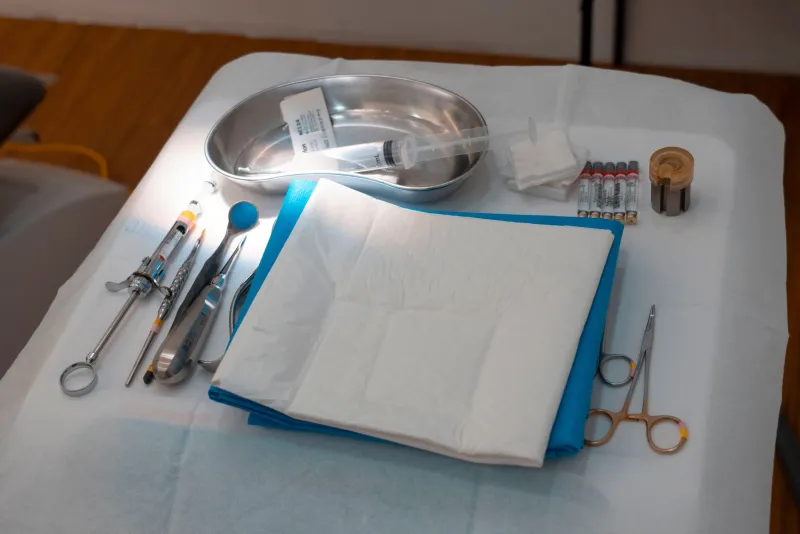
Custom procedure trays occupy an unusual place in outpatient supply management. They arrive as a single unit, are billed or budgeted as a single line, and are often reviewed as a single purchasing decision. In practice, however, a tray is a bundle of individual clinical choices. Some components are used in nearly every case; others are opened only when a surgeon requests them; still others remain sealed and are discarded with the wrapper. For practices that perform a moderate volume of procedures, the gap between what a tray contains and what a case actually consumes can become a recurring expense that no invoice line clearly explains.
The remedy is not to abandon custom trays. Their value in reducing setup time, standardizing case preparation, and limiting sterile-field interruptions is real. The remedy is to audit the tray at the component level before the next renewal or distributor negotiation. That audit does not require a sophisticated analytics platform. It requires a sample of opened trays, a simple recording method, and a willingness to compare the contents against what clinicians actually use.
Begin With the Opened Tray, Not the Catalog
A tray review should start with the physical product, not the distributor's catalog description. Select a representative sample of procedures over a defined period, ideally spanning several surgeons and case types. For each case, record the tray lot number, the procedure performed, and the components that were opened versus those that remained sealed. This work should be conducted after the case and in accordance with infection-control policy; the audit is a documentation exercise, not a reason to compromise the sterile field or delay room turnover.
The most useful data point is not simply whether an item was used. It is whether the item was opened and then discarded unused, or never opened at all. An item that is routinely opened but rarely used may indicate a workflow habit rather than a clinical requirement. An item that is never opened may be a candidate for removal from the tray configuration. Both observations belong in the review, but they call for different conversations.
Build a Component Ledger
Translate the tray contents into a ledger. List each component, its quantity, and, where available, its unit cost. Then map each component to a step in the procedure. This mapping does not need to be clinically exhaustive; it needs to be practical enough to show which items are essential, which are optional, and which are present mainly because the tray has always included them.
Assign a simple use category to each item: routine, occasional, or unused in the sample. A routine item appears in most cases. An occasional item appears in a meaningful minority. An unused item does not appear at all in the sampled cases. The categories are not judgments about clinical necessity. They are prompts for review. A practice may decide that an unused item must remain in the tray for safety or regulatory reasons. The point is to make that decision explicit rather than inherited.
The Duplication Check
Outpatient practices often stock gloves, gauze, sutures, syringes, and other basics in the supply room as well as inside custom trays. Duplication is not automatically wasteful, because the tray exists to support the case and the supply room supports the broader practice. But duplication becomes costly when the tray includes items that are already reliably stocked and easily added to the case at the point of use.
Compare tray contents against par levels in the supply room. If an item is already maintained at a dependable level and is not required to be sterile within the tray, its presence in the tray deserves scrutiny. Duplicate items carry two costs: the direct cost of the item and the cost of managing two expiration dates, two storage locations, and two replenishment paths. In some cases, the tray configuration can be simplified without reducing clinical readiness.
Expiration and the Add-On Problem
Custom trays sometimes include add-on items that are selected for a particular surgeon or procedure but are used infrequently. These items may have shorter shelf lives than the tray itself, or they may expire before the tray is opened. When that happens, the practice pays for an item that cannot be used and may need to open a second tray or pull a replacement from stock.
Record expiration dates at receipt and compare them with the practice's typical tray turnover. If an add-on consistently expires before use, the tray configuration, the order quantity, or the storage rotation needs attention. The same principle applies to trays that are customized for low-volume procedures. A tray built for convenience can become a liability when its contents outlast their useful dates on the shelf.
A Review Cycle That Survives Turnover
A one-time audit is useful, but a review cycle is more durable. Assign an owner, set a cadence, and define the sample size in advance. A semiannual review is often sufficient for stable procedure mixes; a quarterly review may be appropriate when surgeons, case volumes, or tray configurations change. Include perioperative staff, materials management, and infection prevention in the conversation. Keep a version history of tray configurations so that changes can be traced.
Before a tray renewal or distributor negotiation, review the most recent six to twelve months of audit findings. Bring the component ledger, the use categories, and the expiration observations. That evidence is more persuasive than a general complaint about cost. It allows the practice to ask specific questions: Can this component be removed? Can the quantity be reduced? Can the tray be configured in two versions for high-use and low-use cases? Can the distributor provide usage reports that align with the practice's own records?
Negotiating With Evidence
From a distribution perspective, custom trays are often priced as a package, which can obscure the cost of individual components. A component-level audit gives the practice a way to compare total cost per case rather than tray price alone. It also creates a basis for discussing substitutions, minimum order quantities, and freight terms. The goal is not to win a negotiation on a single line item. The goal is to ensure that the tray reflects actual clinical work and that the practice is not paying for unopened components, duplicate stock, or expired add-ons.
A custom procedure tray is a small supply chain decision repeated across every case. When it is reviewed with the same discipline applied to other clinical supplies, it becomes easier to defend, easier to standardize, and easier to revise when practice patterns change.